How Continuous ECG Monitoring Helps Detect Intermittent Arrhythmias

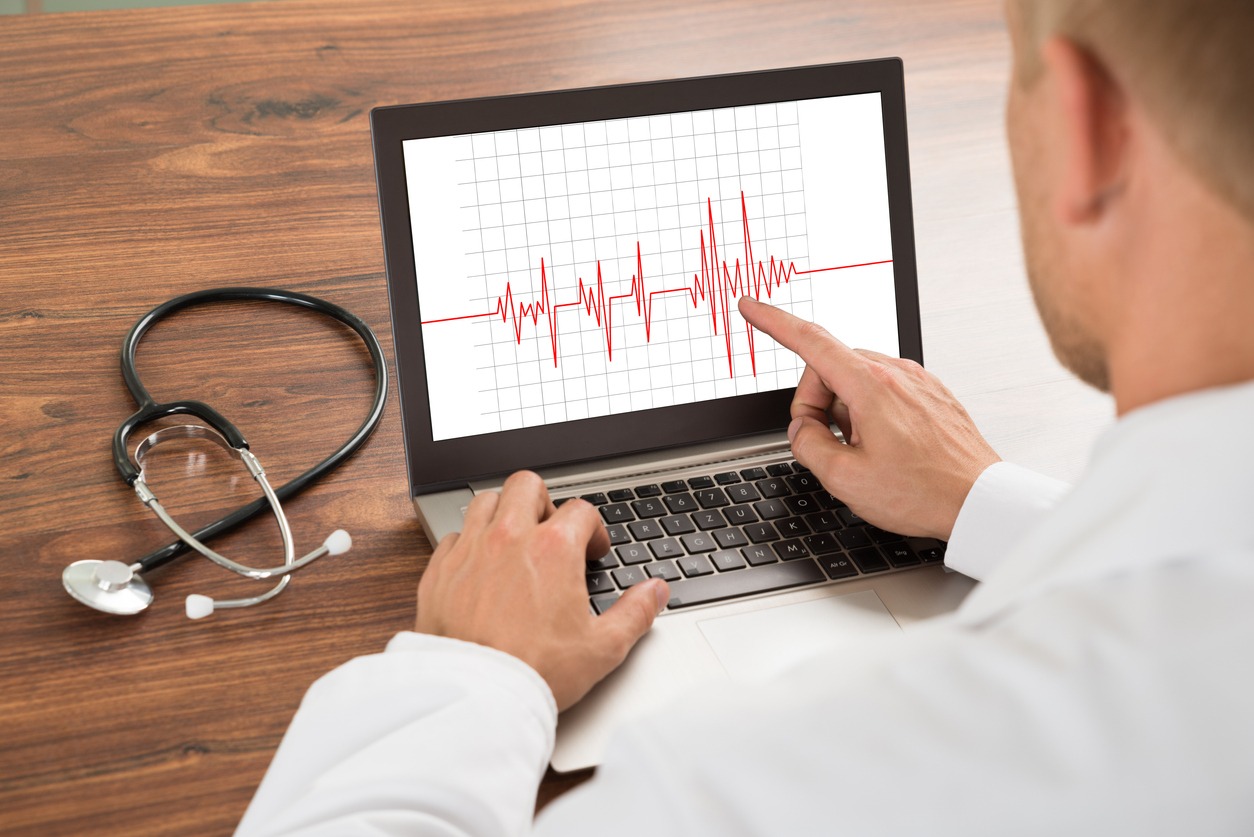
The Short Answer: Continuous ECG monitoring records every heartbeat for days or weeks instead of hours, so it captures irregular rhythms that come and go between office visits. That longer recording window raises the odds of catching intermittent arrhythmias like atrial fibrillation, which often cause no symptoms when they happen.
A resting ECG covers about ten seconds of heart rhythm. A Holter monitor covers a day or two. Patients with palpitations, dizziness, or unexplained fainting can go weeks between episodes, so a short test often lands on a quiet stretch and comes back normal. Continuous ECG monitoring closes that gap by recording without interruption while patients go about their daily activities.
Why Intermittent Arrhythmias Slip Past Standard Testing
An intermittent, or paroxysmal, cardiac arrhythmia starts and stops on its own. An episode may last 30 seconds or several hours, then stay away for weeks.
Four things make these rhythms hard to record:
- Timing is unpredictable: Symptoms rarely line up with a scheduled ECG recording in a clinical setting.
- Many episodes are silent: American Heart Association consumer research found that 62% of people with AFib had no knowledge of the condition before they were diagnosed.
- Short tests sample a small slice of time: A 24-hour study covers about 3% of a month.
- Patient-triggered devices depend on the patient: An event monitor records only when someone presses a button, so episodes during sleep go unrecorded.
A missed arrhythmia has consequences. Atrial fibrillation is the most common heart arrhythmia in the United States, and the CDC projects 12.1 million cases by 2050. Untreated AFib raises stroke risk, and undetected conduction disease can progress toward syncope, clinical deterioration, or cardiac arrest.
Short-Term and Continuous Monitoring Side by Side
Each option covers a different window of time:
- Resting 12-lead ECG: about 10 seconds, read immediately in the clinical setting. It captures only the rhythm present at that moment.
- Holter monitor: 24 to 48 hours, reviewed after the device is returned. A Holter monitor fits patients with daily or near-daily symptoms.
- Event monitor: up to 30 days, but recording starts only when the patient triggers it. That works when symptoms are obvious.
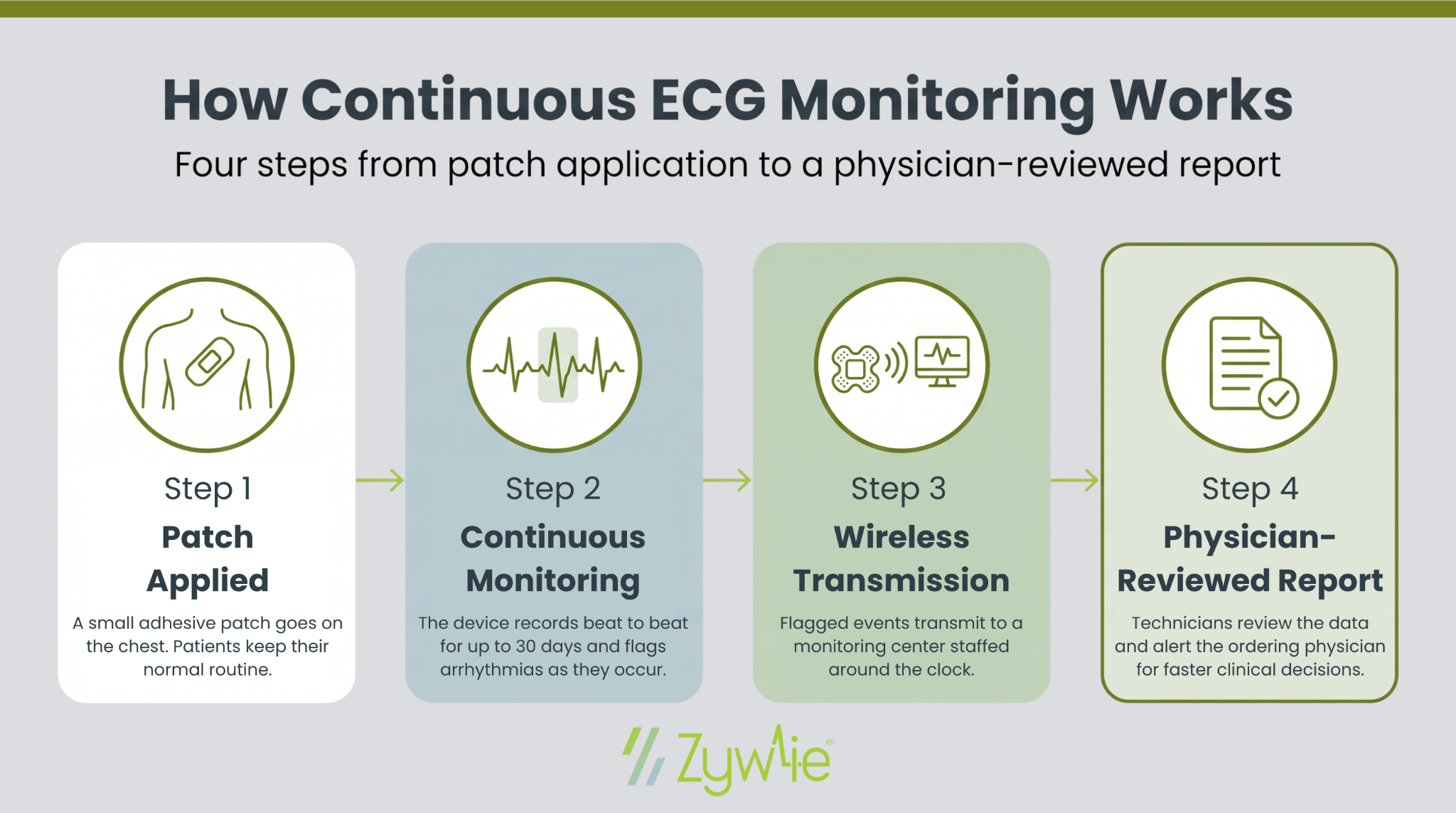
- Continuous ECG monitor, or mobile cardiac telemetry: up to 30 days of always-on recording, with flagged events sent to a monitoring center in near real time.
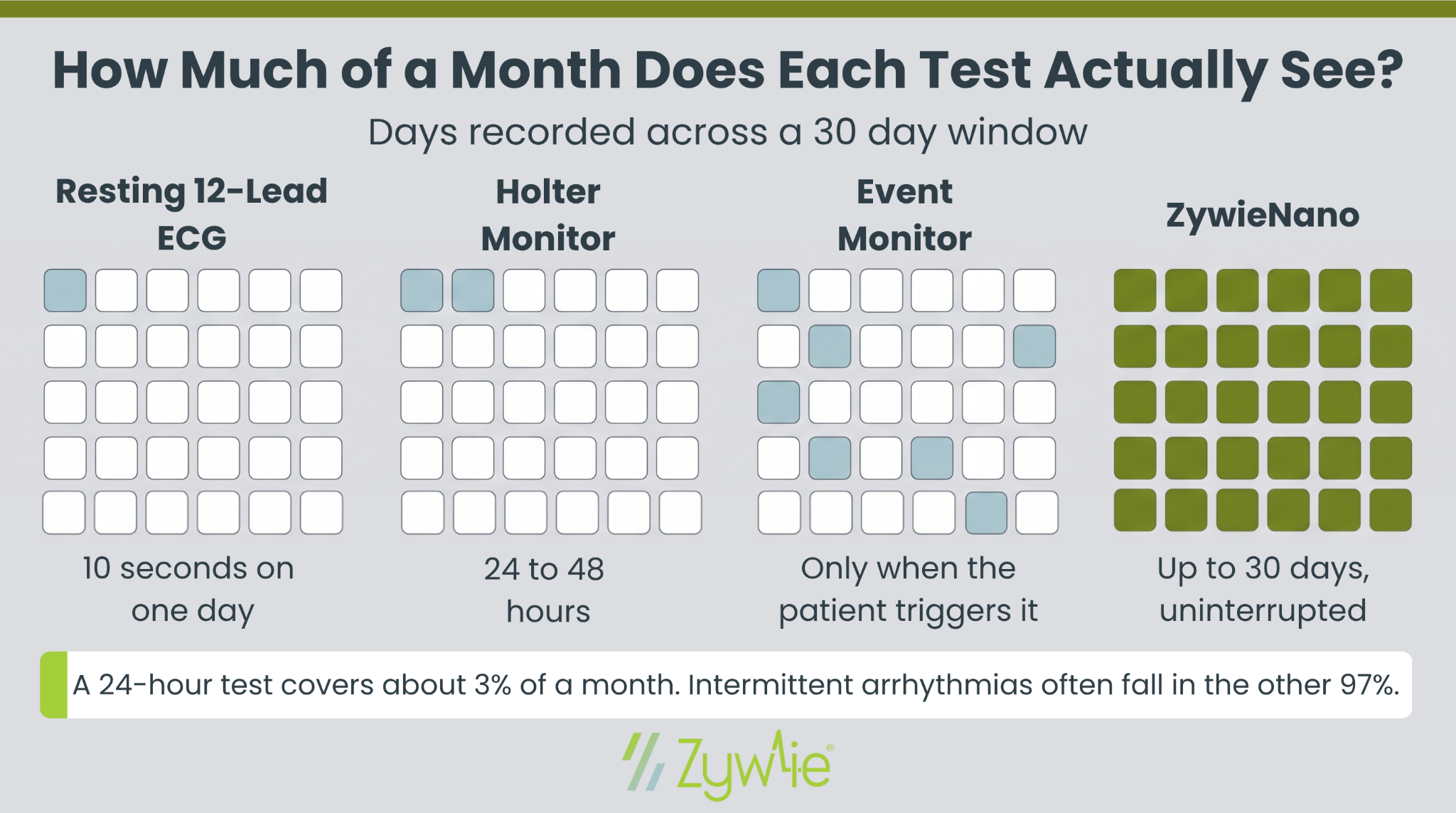
Intermittent monitoring works well when symptoms occur most days. When episodes are rare, continuous ECG monitoring produces a higher diagnostic yield. Zywie's guide to mobile cardiac telemetry explains the transmission piece in more detail.
What the Research Shows About Longer Monitoring Windows
Three studies point in the same direction on recording time and arrhythmia detection.
- CRYSTAL AF, published in the New England Journal of Medicine: In this clinical trial of cryptogenic stroke patients, continuous monitoring detected atrial fibrillation in 8.9% of patients at six months compared with 1.4% under standard care, a 6.4-fold difference. By 36 months, the figures were 30% and 3%.
- Barrett et al., American Journal of Medicine: In 146 patients who wore a 24-hour Holter monitor and a 14-day adhesive patch at the same time, the patch recorded 96 arrhythmia events over its full wear time compared with 61 from the Holter.
- mSToPS, published in JAMA: This randomized study, paired with a matched observational cohort study, diagnosed new atrial fibrillation in 6.3% of participants who wore a continuous ECG monitoring patch compared with 2.3% of those receiving routine care over one year.
Detection climbs as monitoring time increases, and much of that added yield comes from episodes patients never felt.
Arrhythmias Continuous Monitoring Helps Detect
- Atrial fibrillation: disorganized atrial activity with an irregular ventricular response. Paroxysmal AFib is the most common target for extended monitoring.
- Atrial flutter: an organized reentrant circuit that produces a sawtooth pattern on the ECG. AFib and atrial flutter carry similar stroke risk but call for different treatment.
- Supraventricular tachycardia: fast narrow-complex episodes that often stop before the patient reaches an emergency department.
- Ventricular tachycardia: wide-complex runs that carry higher risk, particularly after a myocardial infarction or in patients with heart failure.
- Bradycardia, pauses, and AV block: slow rhythms and dropped beats that frequently appear overnight.
Continuous monitoring also documents how a patient responds to antiarrhythmic therapy and whether reported symptoms line up with an actual rhythm change.
What Continuous Monitoring Means for Patients
- The adhesive patch is small enough to wear under clothing, which supports compliance across a 14- to 30-day window.
- Recording continues during sleep, exercise, and work, with no button to press.
- Patients log symptoms so the monitoring team can match a complaint to the ECG recording.
- Wear time happens at home, which extends ambulatory ECG monitoring to patients who cannot easily return to a clinic.
What Continuous Monitoring Means for Care Teams
- Timely diagnosis: findings reach the physician during the monitoring period rather than weeks later.
- Early detection: a significant arrhythmia can be flagged before it produces a serious event.
- Fewer repeat studies: one extended recording often replaces a series of short ones.
- Support for primary care: physicians outside cardiology get physician-reviewed data to guide referral.
- Better patient outcomes: less time passes between symptom onset and treatment.
Getting Faster Answers on Intermittent Arrhythmias
Intermittent arrhythmias are hard to catch because they rarely appear on demand. Longer, uninterrupted electrocardiographic monitoring is the most reliable way to record them, and detection rates rise as the recording window extends.
Zywie Healthcare built its monitoring around that need. The ZywieNano™ is an adhesive patch no bigger than a Band-Aid that captures up to 30 days of continuous ECG data with beat-to-beat analysis and near real-time transmission to a certified clinical technician-reviewed monitoring center. Clinicians receive timely alerts with customizable parameters, so they see the findings that matter for that patient without waiting for a device to come back.
Explore the Zywie device suite to see how the system fits into an existing workflow, or contact Zywie Healthcare to start ordering continuous ECG monitoring for your patients.
Join Us in Revolutionizing Cardiology – Let's Transform Heart Health Together