Why Am I Waking Up With My Heart Racing?

The Short Answer: Waking up with your heart racing usually traces back to sleep apnea, a nocturnal panic attack, or something that spikes stress hormones overnight, like alcohol or low blood sugar. Less often, it signals an arrhythmia such as atrial fibrillation, which is why repeated episodes are worth checking with a healthcare provider.
Jolting awake with a pounding heart is unsettling, and the feeling usually fades before you can make sense of it. Most causes are manageable once identified, though a few call for a closer look at your heart rhythm.
What Your Heart Normally Does at Night
Your heart rate is not steady while you sleep. It drops during deep sleep, then climbs during REM, when dreaming and brain activity pick up. Brief rises are part of a normal sleep cycle.
A pounding or fluttering sensation is called a heart palpitation, and it is a symptom rather than a diagnosis. What is not normal is waking up with a rapid heartbeat that lasts several minutes, happens often, or comes with chest pain or difficulty breathing.
Common Causes of a Racing Heart at Night
Obstructive Sleep Apnea
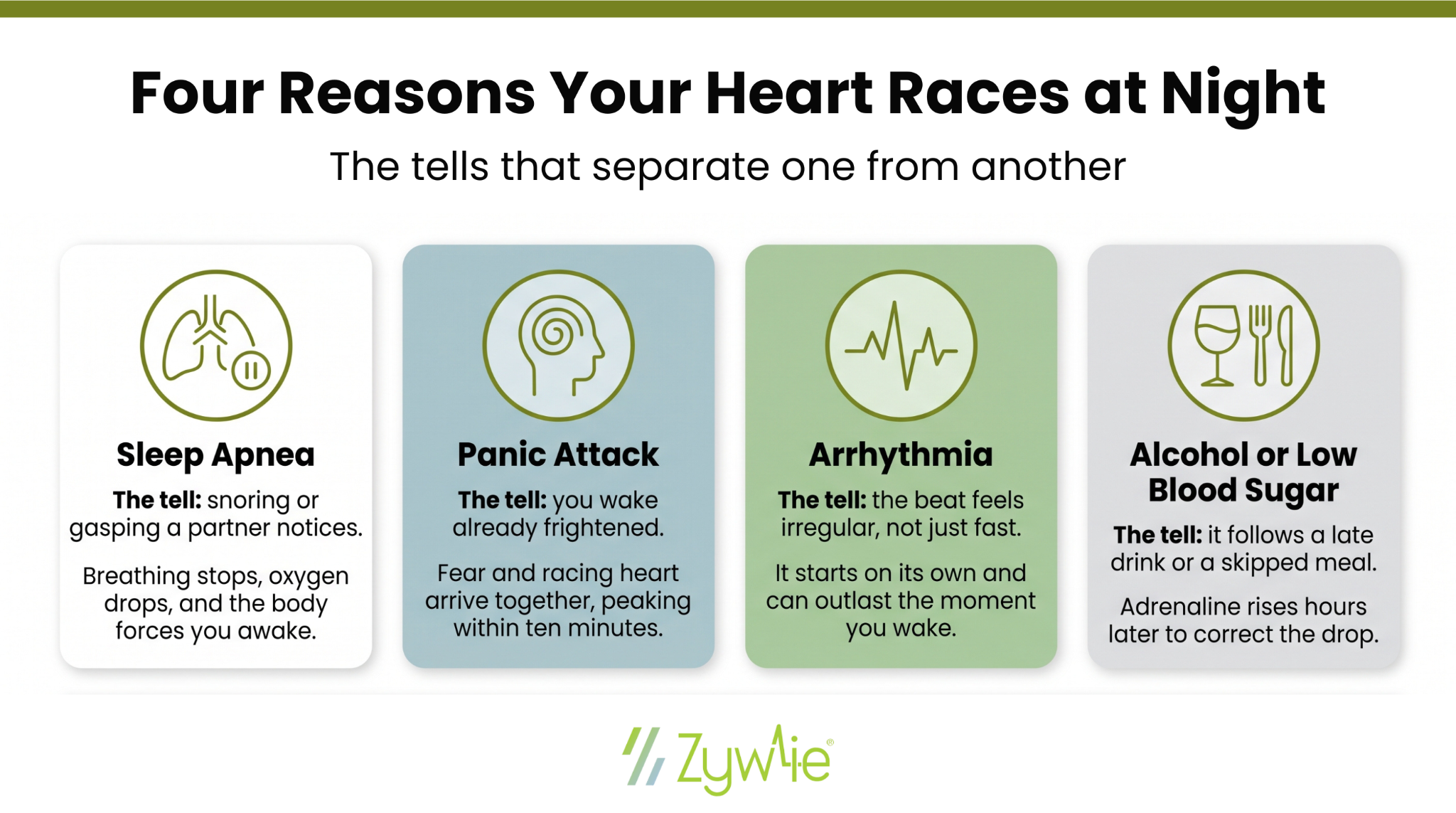
Sleep apnea is the most frequent medical explanation. During an apnea event, the airway collapses and breathing stops for seconds at a time. Oxygen levels fall, and the nervous system releases stress hormones to force you awake and restart breathing. That surge is what leaves your heart pounding.
Signs that point toward sleep apnea:
- Loud snoring or gasping that a partner notices
- Waking with a dry mouth, headache, or sore throat
- Daytime fatigue despite a full night in bed
- Episodes that happen several times a week
Severe sleep apnea also raises the risk of high blood pressure, heart disease, and stroke over time, and it is closely tied to atrial fibrillation and heart failure. It is worth diagnosing rather than living with.
Nocturnal Panic Attacks
A panic attack can start during sleep with no dream or trigger leading into it. You wake already in the middle of one: racing heart, shortness of breath, sweating, and a sense of dread. Episodes typically peak within ten minutes.
Nocturnal panic attacks are most common in people with panic disorder or another anxiety disorder, though chronic stress and sleep deprivation can set one off in someone with no history. Cognitive behavioral therapy has strong evidence behind it, and a provider can walk through treatment options with you.
Atrial Fibrillation and Other Arrhythmias
Sometimes the racing heart is the heart itself, not a reaction to something else. Atrial fibrillation often shows up at night, when the body is at rest and the nervous system shifts.
Arrhythmia clues look different from the causes above:
- The rhythm feels irregular or fluttering rather than fast and steady
- It starts without any dream, gasp, or feeling of panic
- It can last much longer than a few minutes
- It sometimes happens during the day too
Our breakdown of AFib versus atrial flutter covers what separates those two rhythms, and tachycardia versus bradycardia explains where the line for a fast heart rate actually sits.
Low Blood Sugar
If blood sugar drops overnight, the body releases adrenaline to correct it. That causes sweating, shakiness, and a racing heart. This is most common in people who take insulin or certain diabetes medications, but it also happens after alcohol or a long stretch without eating.
Alcohol, Caffeine, and Medications
Alcohol before bed is one of the most reliable ways to wake up with a pounding heart. It fragments sleep and causes a rebound in heart rate several hours after the last drink.
Other contributors include caffeine late in the day, decongestants, some asthma inhalers, thyroid medication, and stimulants prescribed for attention disorders.
An Overactive Thyroid
Too much thyroid hormone speeds the heart around the clock. Alongside night time palpitations, look for unexplained weight loss, heat intolerance, tremor, and anxiety that feels new. A blood test settles it quickly.
Night Terrors and Vivid Dreams
Night terrors cause a sudden arousal from deep sleep with a racing heart and disorientation, often with no memory of the episode afterward. They are more common in children, though adults can have them, particularly during periods of poor sleep or high stress.
Sorting Out Which One It Is
A few questions narrow the field fast:
- Does a partner hear snoring or pauses in your breathing? Points toward sleep apnea.
- Do you wake up already frightened? Points toward a nocturnal panic attack.
- Does the beat feel irregular rather than just fast? Points toward an arrhythmia.
- Did you drink alcohol or skip dinner? Points toward a metabolic or substance trigger.
- Does it also happen during the day? Points away from sleep-related conditions.
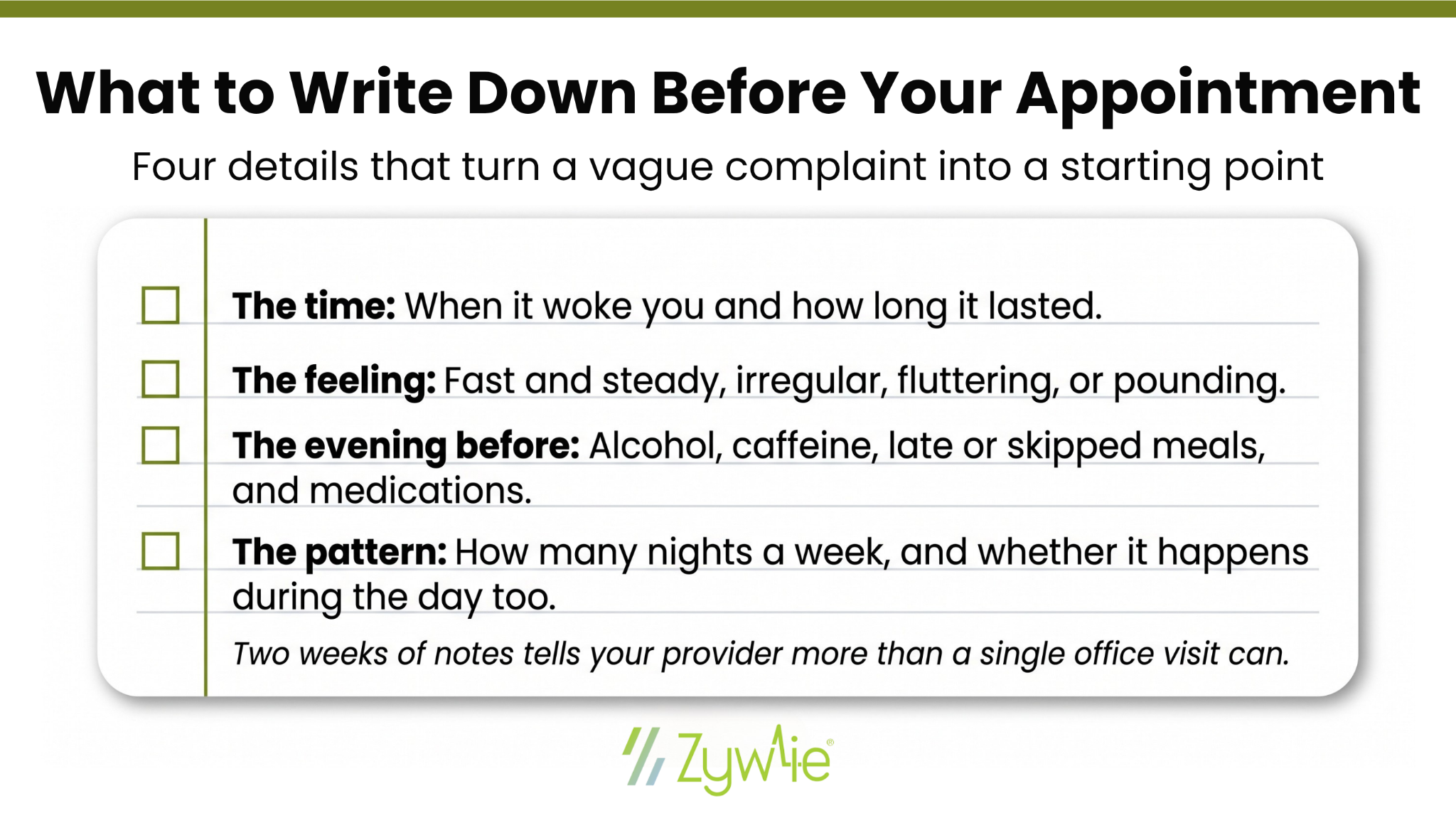
Keep a short log for two weeks. Note the time, what you felt, how long it lasted, and what you did that evening. That record is the most useful thing you can bring to an appointment.
When to Get Checked
Contact a healthcare provider promptly if a racing heart comes with:
- Chest pain or pressure
- Fainting or near-fainting
- Difficulty breathing that does not settle
- Episodes lasting longer than a few minutes
- A known history of heart disease
Chest pain with a rapid heartbeat can signal a heart attack and is a reason to call 911 rather than wait.
What Helps in the Meantime
None of this replaces medical advice, but a few lifestyle changes reduce episodes for many people:
- Stop alcohol at least three hours before bed
- Cut caffeine after early afternoon
- Keep a consistent sleep and wake time, which is the foundation of good sleep hygiene
- Eat something with protein in the evening if you tend to go long stretches without food
- Practice relaxation techniques such as slow breathing when you wake, rather than checking the clock
How the Cause Gets Confirmed
If your provider suspects a sleep disorder, a sleep specialist orders a sleep study to count breathing pauses and track oxygen levels overnight.
If the suspicion is cardiac, the challenge is different. A resting ECG in the office lasts seconds and almost never catches an episode that happens at 3 a.m. once a week. That is why physicians turn to ambulatory monitoring, which records continuously while you go about your life, including while you sleep.
Getting an Answer Instead of a Guess
A racing heart at night has several possible explanations, and the difference between them decides whether the fix is a CPAP machine, therapy, a medication change, or treatment for an arrhythmia. Symptoms that come and go are hard to catch, which is what leaves so many people cycling through appointments without a clear answer.
Extended cardiac monitoring closes that gap. Zywie Healthcare's ZywieNano™ patch records continuously for up to 30 days and transmits cardiac data in near real-time to a monitoring center, where it is reviewed by certified cardiac monitoring technicians. This allows clinically significant events, even those occurring overnight, to be identified and communicated to the care team without waiting for the device to be returned at the end of the study.
Explore what to expect as a patient or contact Zywie Healthcare to learn how continuous monitoring supports a faster, more confident diagnosis.
Join Us in Revolutionizing Cardiology – Let's Transform Heart Health Together