FOR PROVIDERS
Zywie Nano™ Patch: 30-Day Heart Monitor
Extended cardiac monitoring across a full 30-day period, giving you the diagnostic data needed to identify intermittent arrhythmias that shorter studies often miss.


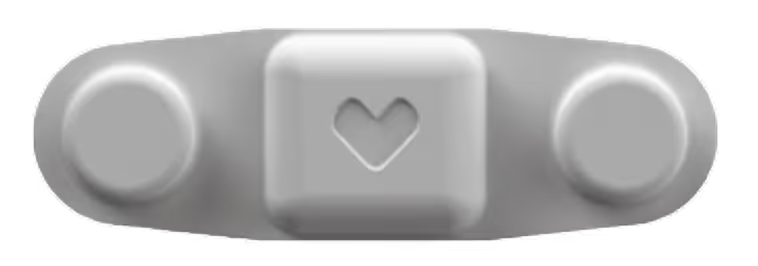
No bigger than a bandaid!
Catch What Shorter Studies Miss
A traditional Holter monitor captures only 24 to 48 hours of cardiac data. For patients with infrequent symptoms or suspected paroxysmal atrial fibrillation, this short window often misses the diagnostic event entirely. A 30-day heart monitor extends the recording window long enough to capture intermittent arrhythmias, with Zywie's own clinical data showing 16-28% higher detection of first AFib, pause, and ventricular tachycardia events between days 15 and 30 compared to a 14-day study.
Trusted by physicians and prescribed to more than 500,000 patients, the Zywie Nano™ Patch combines the diagnostic depth of mobile cardiac telemetry with the comfort of a patch monitor. The portable device continuously records the heart's rhythm with beat-to-beat analysis while patients carry on with their daily activities, supporting early detection of any irregular heart rhythm with AI-driven, near real-time data delivery.
No bigger than a Band-Aid, the Zywie Nano™ Patch delivers 30 days of high-fidelity ECG data without disrupting your patient's daily life.
Trusted by physicians and prescribed to more than 500,000 patients, the Zywie Nano™ Patch combines the diagnostic depth of mobile cardiac telemetry with the comfort of a patch monitor. The portable device continuously records the heart's rhythm with beat-to-beat analysis while patients carry on with their daily activities, supporting early detection of any irregular heart rhythm with AI-driven, near real-time data delivery.
No bigger than a Band-Aid, the Zywie Nano™ Patch delivers 30 days of high-fidelity ECG data without disrupting your patient's daily life.
Learn More

90mm


28mm

As easy as 1,2,3...
Prescribe and Apply
Order 30-day cardiac monitoring through your standard workflow. The small device is applied in your office or shipped directly to your patient with clear, step-by-step instructions for easy self-application at home.
Continuous Monitoring
The patch monitor records the heart's rhythm 24/7 for the full 30-day period, capturing every heartbeat while your patient continues daily activities, including sleeping, showering, and exercising without interruption.
Detailed Test Results
After monitoring ends, the device is returned by mail. Reports are delivered to your office within 1-3 business days of study completion, with analyzed data on heart rate, abnormal heartbeat events, and patient-recorded symptoms.
When to Order 30-Day Cardiac Monitoring

A 30-day heart monitor is most appropriate when shorter studies are unlikely to capture the diagnostic event. Common clinical indications for extended cardiac monitoring include:
- Suspected paroxysmal atrial fibrillation that does not appear on a standard EKG
- Cryptogenic stroke workup, where occult AFib may be the cause of an ischemic stroke
- Unexplained palpitations, dizziness, syncope, or chest pain occurring infrequently
- Symptom-rhythm correlation when patient symptoms happen days or weeks apart
- Post-ablation monitoring to assess rhythm stability over a longer period
- Evaluation of antiarrhythmic medication effectiveness
For patients with very rare symptoms (less than once per month), a loop recorder or insertable cardiac monitor may be more appropriate. For most outpatient diagnostic needs, a 30-day patch monitor offers the right balance of diagnostic yield and patient compliance.
.jpg)
Why 30 Days Improves Detection of These Arrhythmias
Many of the most clinically significant arrhythmias are paroxysmal, meaning they come and go unpredictably. A 30-day monitoring window captures intermittent events that shorter studies frequently miss.
Paroxysmal Atrial Fibrillation
AFib episodes can last minutes or hours and may occur only once every few weeks. A 24-hour Holter monitor often returns a normal result in patients who do, in fact, have AFib. Extending monitoring to 30 days significantly improves detection, which is especially important for cryptogenic stroke workup, where occult AFib may be the underlying cause.
Non-Sustained Ventricular Tachycardia
Brief runs of VTach can occur days or weeks apart and may produce no symptoms when they do. A 30-day heart monitor records every episode across the full monitoring period, giving you a complete picture of frequency, duration, and rhythm characteristics that a short study cannot provide.
Intermittent Pauses and AV Block
Sinus pauses and intermittent AV block often produce symptoms like syncope or near-syncope only when an event occurs, which may be days apart. Continuous monitoring across 30 days helps correlate patient-reported symptoms with the underlying rhythm disturbance and guide treatment decisions.
Frequently Asked Questions
How is a 30-day heart monitor different from a Holter monitor?

A Holter monitor records the heart's activity for 24 to 48 hours using several electrodes and lead wires. The Zywie Nano™ Patch is a small, single-patch device that records continuously for up to 30 days, dramatically improving detection of paroxysmal atrial fibrillation and other intermittent abnormal rhythms.
When should I choose a 30-day monitor over a 7-day or 14-day study?
A 30-day study is the right call for patients with very infrequent symptoms or for cryptogenic stroke workup, where the goal is to detect occult AFib. For patients with symptoms occurring multiple times a week, a 7-day monitor typically delivers a faster path to diagnosis. For symptoms appearing about once a week, a 14-day monitor is generally the strongest fit.
Can patients shower, sleep, and exercise while wearing the monitor?
Yes. The water-resistant patch stays in place during showering, sleeping, and most forms of exercise. Patients should avoid submerging the device, which means no swimming or hot tubs, but normal daily activities are fully supported throughout the 30-day period.
What heart conditions can a 30-day monitor detect?
The device detects atrial fibrillation, atrial flutter, ventricular tachycardia, supraventricular tachycardia, sinus pauses, AV block, and other forms of irregular heartbeat. It also helps correlate patient-recorded symptoms with specific rhythm events.
How quickly will I receive the test results?
Reports are delivered to your office within 1-3 business days of study completion, including rhythm analysis across the full 30 days, heart rate trends, arrhythmia burden, and symptom-rhythm correlations.
Why is 30-day monitoring important for cryptogenic stroke patients?
Paroxysmal AFib often goes undetected because episodes can be brief and infrequent. A 30-day cardiac monitor significantly improves detection of occult AFib, helping identify patients who may benefit from anticoagulation to reduce future blood clot and stroke risk.
When would an insertable cardiac monitor be more appropriate?
For patients whose symptoms occur less than once per month, or who need monitoring for years rather than weeks, a loop recorder may be the better choice. For most outpatient needs, a 30-day patch monitor provides sufficient diagnostic yield without the invasiveness of implantation.
Join Us in Revolutionizing Cardiology – Let's Transform Heart Health Together
Get in Touch