FOR PATIENTS
Your Zywie Journey

Zywie: Your Trusted Partner in Heart Care
Diagnosing irregular heartbeats with care and precision. Wearing a heart monitor from Zywie captures your heart's electrical activity in near-real time, giving your healthcare provider the accurate diagnosis and detailed heart rhythm data needed in just one easy, efficient diagnostic study.
As easy as 1,2,3...
Get Set with Your Monitor
Apply the Zywie wearable device with ease, attaching the small device directly to your chest either during a visit to your healthcare provider or from the comfort of your home, following clear, step-by-step instructions for self-application that fit into your daily routine.
Tune In to Your Heart
If you notice chest pain, shortness of breath, or any irregular heartbeat, use the provided phone to promptly record your symptoms in the Zywie app, ensuring accurate tracking of your heart's activity throughout the monitoring period.
Return the Device and Review Your Diagnosis
After completing the monitoring period, simply return the portable device by mail. Your healthcare team will schedule a follow-up appointment to thoroughly review the detailed report of your heart rhythm data and work with you to develop a personalized care plan tailored to your heart health needs.
Your Doctor Prescribed a Heart Monitor: What's Next?

At Zywie, we understand that hearing the words 'heart monitor' can be intimidating, and that wearing a heart monitor for the first time can feel overwhelming. Our goal is to make this process as simple and stress-free as possible, empowering both you and your cardiologist to gain a clear understanding of your heart health and make informed decisions to keep you feeling your best.At Zywie, we understand that hearing the words ‘heart monitor’ can be intimidating. Our goal is to make this process as simple and stress-free as possible, empowering both you and your cardiologist to gain a clear understanding of your heart health and make informed decisions to keep you feeling your best.
Trusted by physicians and prescribed to hundreds of thousands of patients, Zywie's small device accurately detects and diagnoses abnormal heart rhythm patterns (also known as Arrhythmias), including atrial fibrillation, with near real-time, reliable monitoring. This precise data enables your healthcare professional to deliver an accurate diagnosis and timely, personalized care.
Trusted by physicians and prescribed to hundreds of thousands of patients, Zywie's small device accurately detects and diagnoses abnormal heart rhythm patterns (also known as Arrhythmias), including atrial fibrillation, with near real-time, reliable monitoring. This precise data enables your healthcare professional to deliver an accurate diagnosis and timely, personalized care.

No bigger than a Band-Aid, the Zywie heart monitor won't disrupt your daily routine. You can comfortably continue your normal daily activities, sleep, shower, or exercise, all while keeping your monitoring experience discreet and seamless.
Learn More

Zywie Learning Hub: Patient Education
Arrhythmias

It is normal for your heart rate to speed up during physical activity and to slow down while resting or sleeping. It is also normal to feel as if your heart skips a beat occasionally. But a frequent irregular rhythm may mean that your heart is not pumping enough blood into your body. You may feel dizzy, faint, or have other symptoms.
An arrhythmia, or irregular heartbeat, is a problem with the rate or rhythm of your heartbeat. Your heart may beat too quickly, too slowly, or with an irregular rhythm.
Arrhythmias are treatable with medicine or procedures to control the irregular rhythms. If not treated, arrhythmias can damage the heart, brain, or other organs.
Most common types of arrhythmia that cardiologists identify
Wearing a heart monitor like the Zywie patch can detect each of these conditions by recording your heart's electrical signals throughout the full monitoring period.
Atrial Fibrillation (AFib)
Atrial fibrillation is the most common type of arrhythmia. More than 2.5 million people in the United States have atrial fibrillation. This condition causes your heart to beat more than 400 beats per minute. Also, your heart’s upper and lower chambers do not work together as they should. When this happens, the lower chambers do not fill completely or pump enough blood to your lungs and body.
Ventricular Tachycardia (VFib)
Ventricular tachycardia is a fast, regular beating of your ventricles that may last for only a few seconds or for much longer. A few beats of ventricular tachycardia often do not cause problems. However, if this lasts for more than a few seconds, it can lead to more serious arrhythmias, such as ventricular fibrillation (v-fib).
Pauses
A premature or extra heartbeat happens when the signal to beat comes too early. This creates a pause, which is followed by a stronger beat when your heart returns to its regular rhythm. It can feel like your heart skipped a beat. This is a common type of arrhythmia, and it can cause other types of arrhythmias.
What is an EKG?
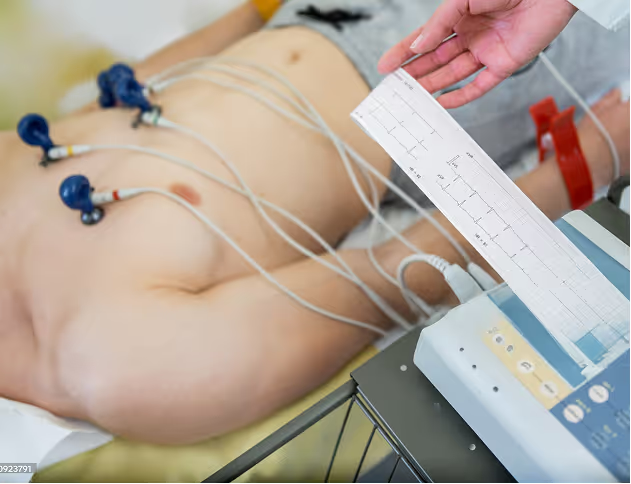
An electrocardiogram (ECG or EKG) is one of the simplest and fastest tests used to evaluate the heart. Electrodes (small, plastic patches that stick to the skin) are placed at certain spots on the chest, arms, and legs. The electrodes are connected to an ECG machine by lead wires. The electrical activity of the heart is then measured, interpreted, and printed out. No electricity is sent into the body.
Natural electrical impulses coordinate contractions of the different parts of the heart to keep blood flowing the way it should. An ECG records these impulses to show how fast the heart is beating, the rhythm of the heart beats (steady or irregular), and the timing of the electrical impulses as they move through the different parts of the heart. Changes in an ECG can be a sign of many heart-related conditions.
Unlike a traditional Holter monitor test that captures the heart's activity for only 24-48 hours, wearing a heart monitor patch from Zywie records the same electrical signals through electrode contact for up to 30 days, giving your healthcare team a more complete picture for accurate results.
Zywie's solution allows patients to track symptoms in an electronic diary using the provided device, ensuring accurate and convenient recording of cardiac episodes, any irregular rhythm patterns, and unusual sensations during your daily activities. Watch the video below for a step-by-step guide on how to use this powerful feature.
At Zywie, we understand that every patient and provider is unique, and we prioritize personalized care above all else.
Discover how Zywie has made a difference for patients like you
Patient Stories
How to log symptoms
Zywie’s solution allows patients to track symptoms in an electronic diary, ensuring accurate and convenient tracking of cardiac episodes. Watch the video below for a step-by-step guide on how to use this powerful feature.
How to use devices
Real stories, real impact
At Zywie, we understand that every patient and provider is unique, and we prioritize personalized care above all else.
Discover how Zywie has made a difference for patients like you
Patient Stories
FOR PATIENTS

Frequently Asked Questions
Can I continue my normal activities while wearing a heart monitor?

Yes. Wearing a heart monitor from Zywie is designed to fit seamlessly into your regular daily activities. The small, lightweight adhesive patch stays securely on your chest while you work, sleep, shower, and exercise, so you can continue your normal daily activities and daily routine without interruption. In fact, going about your normal activity is exactly what your cardiologist wants. The more your heart's rhythm is captured during real-life moments, the more accurate your diagnosis will be. Just avoid fully submerging the device in water and follow any specific instructions provided by your healthcare team.
What symptoms should I log while wearing my heart monitor?
Log any symptom that feels unusual, including chest pain, shortness of breath, dizziness, fainting, an abnormal heartbeat, or a noticeably fast or slow heart rate. You should also log moments where you feel your heart fluttering, pounding, or skipping a beat. Logging these events in the Zywie app pairs your symptom with the exact moment it occurred in your ECG data, giving your healthcare provider critical context for an accurate diagnosis. Even if a symptom seems minor, log it. Patterns matter, and the more data your cardiologist has, the better they can identify any underlying heart condition.
How do I know the Zywie Patch is working?
You can confirm the cardiac monitor is recording by checking the Zywie phone. When "Study in Progress" is displayed on the screen, the device is actively capturing your heart's electrical activity. If you feel a symptom like heart palpitations, chest pain, or an abnormal heartbeat while wearing the patch, log the event in the Zywie phone so your provider can match it to your recorded heart rhythm.
Are there any tests or treatments that are not compatible with the Zywie Patch?
Yes. Certain procedures and equipment can interfere with the patch's recording or damage the device. Avoid the following while wearing the Zywie Patch:
Magnetic fields: Magnetic Resonance Imaging (MRI), MRI technician work, or any job that exposes you to a large magnetic field
Neuromuscular stimulators: brain stimulators, neurostimulators, spinal stimulators, and TENS units
Defibrillation or cardioversion procedures
Common household items, including microwave ovens, metal detectors, and electric blankets, are safe to use during your monitoring period and will not interfere with this type of monitor. If you're unsure about a specific test, treatment, or device, check with your healthcare professional first.
Magnetic fields: Magnetic Resonance Imaging (MRI), MRI technician work, or any job that exposes you to a large magnetic field
Neuromuscular stimulators: brain stimulators, neurostimulators, spinal stimulators, and TENS units
Defibrillation or cardioversion procedures
Common household items, including microwave ovens, metal detectors, and electric blankets, are safe to use during your monitoring period and will not interfere with this type of monitor. If you're unsure about a specific test, treatment, or device, check with your healthcare professional first.
Join Us in Revolutionizing Cardiology – Let's Transform Heart Health Together
Get in Touch