FOR PROVIDERS
Zywie Nano™ Patch: Holter Monitor for Syncope and Fainting
Fainting spells rarely happen on cue. Extended cardiac monitoring with the ZywieNano™ Patch provides continuous heart rhythm monitoring for up to 30 days, increasing the opportunity to capture intermittent arrhythmias and correlate cardiac activity with a patient’s syncopal episode when it occurs.


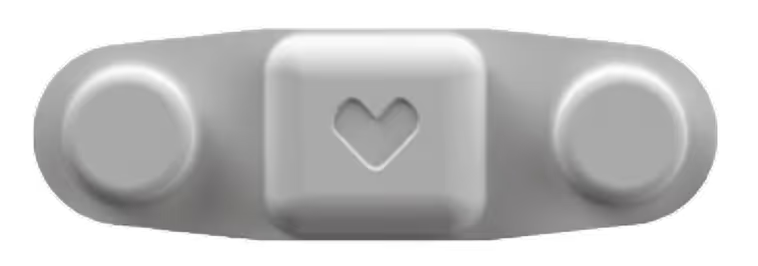
No bigger than a bandaid!
Most Syncope Workups End Without an Answer
Syncope brings patients to the emergency department, and the workup usually follows a familiar path: history, physical exam, 12-lead ECG, and then a 24- to 48-hour Holter monitor recording the heart's electrical activity through several electrodes and lead wires. The problem is arithmetic. Fainting spells are often separated by weeks or months, so a two-day recording window rarely overlaps with an event. Holter monitoring for syncope is known for its low diagnostic yield, and patients frequently go home without knowing the cause of syncope.
Mobile cardiac telemetry changes that equation. The ZywieNano™ Patch continuously records the heart’s rhythm for up to 30 days, extending the monitoring window to increase the opportunity to capture intermittent arrhythmias that shorter-duration monitoring may miss.
When a patient experiences and logs a near-syncope or syncope-related episode, providers can evaluate the cardiac rhythm surrounding the event, helping determine whether an arrhythmia may have contributed to the patient’s symptoms and informing the next step in their care.
Small, discreet, and low-profile, the ZywieNano™ Patch is designed to continuously capture high-quality ECG data while patients go about their normal daily activities. Trusted to monitor more than 500,000 patients, Zywie provides extended cardiac monitoring designed to deliver clearer insight when intermittent symptoms are difficult to capture.
Mobile cardiac telemetry changes that equation. The ZywieNano™ Patch continuously records the heart’s rhythm for up to 30 days, extending the monitoring window to increase the opportunity to capture intermittent arrhythmias that shorter-duration monitoring may miss.
When a patient experiences and logs a near-syncope or syncope-related episode, providers can evaluate the cardiac rhythm surrounding the event, helping determine whether an arrhythmia may have contributed to the patient’s symptoms and informing the next step in their care.
Small, discreet, and low-profile, the ZywieNano™ Patch is designed to continuously capture high-quality ECG data while patients go about their normal daily activities. Trusted to monitor more than 500,000 patients, Zywie provides extended cardiac monitoring designed to deliver clearer insight when intermittent symptoms are difficult to capture.
Learn More

90mm


28mm

Three Steps From Order to Answer
Prescribe and Apply
Order the study the way you order any monitor. The small device is applied during an office visit or mailed to your patient with a short illustrated guide, and there is no wired setup to manage.
Continuous Monitoring
The patch tracks every heartbeat around the clock for the full study period, and your patient taps to log each fainting or near-fainting episode, lightheaded spell, or bout of chest pain as it happens.
Detailed Test Results
Your patient mails the patch back once recording ends, and a report reaches your office within 1-3 business days. It covers heart rate trends, every arrhythmia event, and each logged symptom matched to the rhythm behind it.
When to Order Cardiac Monitoring for Syncope

Extended monitoring earns its place whenever a fainting episode may have a rhythm explanation that a single day of recording is unlikely to catch. Common clinical indications include:
- Unexplained syncope or near-syncope after an inconclusive physical examination and 12-lead ECG
- Recurrent syncope where the cause remains unclear following the initial workup
- Suspected cardiac syncope, particularly fainting during exertion, while supine, or preceded by chest pain
- Syncope in patients with structural heart disease, hypertrophic cardiomyopathy, or a known cardiac arrhythmia
- Fainting spells in older adults, where sinus pauses, bradycardia, or bundle branch block may be responsible
- Suspected ventricular tachycardia, supraventricular tachycardia, atrial fibrillation, or atrial flutter behind the episode
- Separating cardiogenic syncope from vasovagal syncope or orthostatic hypotension when head-up tilt testing and a stress test are inconclusive
- Rhythm surveillance after catheter ablation or after starting or adjusting antiarrhythmic therapy
When episodes occur less than once a month, or when a patient needs years of surveillance, an implantable loop recorder or implantable cardiac monitor is the better diagnostic tool. For nearly every other outpatient syncope workup, extended MCT monitoring delivers stronger diagnostic yield without the invasiveness of implantation.
.jpg)
Why MCT Has Become the Pathway for Syncope
Holter monitoring gave cardiology its first look at ambulatory ECG, but developments in the field have made the case for prolonged cardiac monitoring. For a symptom as infrequent as syncope, widening the window and adding near real-time transmission is now the practical standard.
A Two-Day Recording Rarely Catches a Fainting Spell
A recording device that runs for 24 to 48 hours only helps if an event happens inside that window. Because syncope episodes can sit weeks apart, most short studies come back normal even when an abnormal heart rhythm is the underlying cause, which sends the patient back for a repeat study and delays treatment.
A Longer Window Captures More Events
Extending the study multiplies the odds of recording an episode. Zywie's own clinical data shows 16-28% higher detection of first AFib, pause, and ventricular tachycardia events between days 15 and 30 compared to a 14-day study, and pauses and ventricular tachycardia are exactly the rhythms that drop blood flow to the brain and cause a patient to faint.
Near Real-Time Review, Not a Report Weeks Later
A traditional Holter is read only after the recorder comes back. Mobile cardiac telemetry records continuously and transmits automatically, so a high-grade block or a run of ventricular tachycardia surfaces during the study rather than after it. When syncope turns out to be cardiac, that timing shapes how quickly a pacemaker or implantable cardioverter defibrillator decision gets made.
Frequently Asked Questions
Why is a Holter monitor often not enough to diagnose syncope?

A Holter monitor records the heart's electrical activity for 24 to 48 hours using chest electrodes and lead wires. Syncope episodes are usually far too infrequent to land inside that window, which is why Holter monitoring for syncope has a low diagnostic yield and often produces a normal result in patients who do have a rhythm problem.
How is the Zywie Nano™ Patch different from a 24-hour Holter monitor?
It replaces the electrodes, lead wires, and belt-worn recorder with one adhesive patch, and it records for up to 30 days instead of one. Because it uses mobile cardiac telemetry, the data transmits automatically for near real-time review instead of waiting for the device to be returned.
How does monitoring help separate cardiac syncope from vasovagal syncope?
Vasovagal syncope involves a reflex drop in heart rate and blood pressure as blood vessels dilate, while cardiogenic syncope stems from an arrhythmia or structural cause. Continuous ECG documents what the heart rhythm was doing at the moment of the episode, which either identifies a rhythm cause or helps rule one out. The patch records ECG and heart rate, not blood pressure, so orthostatic hypotension is assessed separately.
How does the patch compare with an event monitor or loop recorder?
A cardiac event monitor and an external loop recorder both depend on the patient activating them, which is unreliable during an episode that ends in loss of consciousness. An implantable loop recorder suits patients needing months or years of surveillance. The Zywie Nano™ Patch records every beat automatically for up to 30 days with nothing for the patient to trigger.
How long should a patient wear the monitor for syncope?
Seven days can be enough when near-syncope is happening several times a week. Fourteen days fits roughly weekly patterns. Thirty days is the strongest choice for recurrent syncope with infrequent episodes. Zywie offers all three lengths.
Can patients shower, sleep, and exercise while wearing the monitor?
Yes. The waterproof patch stays in place through showering, sleeping, and most exercise. Patients should avoid submerging it, so prolonged water sports and hot tubs are out, but everyday activity continues uninterrupted.
How quickly will I receive the test results?
Reports reach your office within an average of 1-3 business days of study completion, including rhythm analysis across the full monitoring period, heart rate trends, arrhythmia burden, and every logged symptom matched to the rhythm recorded at that moment.
Join Us in Revolutionizing Cardiology – Let's Transform Heart Health Together
Get in Touch