FOR PROVIDERS
Zywie Nano™ Patch: 7-Day Heart Monitor
Seven days of uninterrupted ECG data, focused on patients with frequent symptoms who need a clear answer fast.


No bigger than a bandaid!
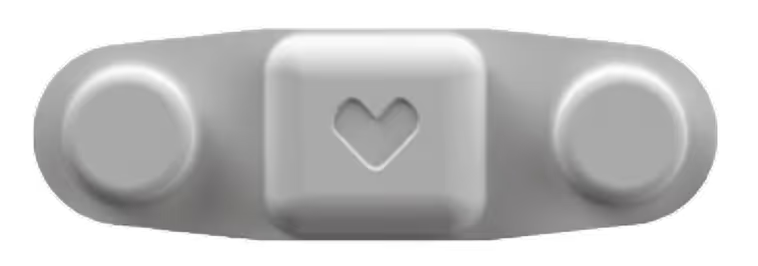
More Diagnostic Power Than a 24-Hour Holter
When symptoms surface every few days, a single day of monitoring is rarely enough to land on a diagnosis. Stepping up to a 7-day study gives clinicians a full week of continuous ECG data, which is generally enough to capture frequent arrhythmia events while keeping the patient's time on the monitor short.
The Zywie Nano™ Patch brings the diagnostic strength of an ambulatory cardiac monitor into a single adhesive patch worn directly on the chest. It tracks the heart's electrical activity with beat-to-beat analysis throughout the monitoring period, sending the ECG recording through Zywie's AI-driven platform for near real-time review.
The Zywie Nano™ Patch is about the size of a Band-Aid and provides seven days of high-fidelity ECG data without interfering with your patient's normal daily routine.
The Zywie Nano™ Patch brings the diagnostic strength of an ambulatory cardiac monitor into a single adhesive patch worn directly on the chest. It tracks the heart's electrical activity with beat-to-beat analysis throughout the monitoring period, sending the ECG recording through Zywie's AI-driven platform for near real-time review.
The Zywie Nano™ Patch is about the size of a Band-Aid and provides seven days of high-fidelity ECG data without interfering with your patient's normal daily routine.
Learn More

90mm


28mm

As easy as 1,2,3...
Prescribe and Apply
Place an order for 7-day cardiac monitoring through your usual workflow. The portable device can be applied in your office or shipped to your patient with simple, illustrated instructions for at-home setup.
Continuous Monitoring
Across the entire week, the patch monitor logs the heart's rhythm in real time, picking up every heartbeat while your patient goes about daily activities, including sleep, showers, and workouts.
Detailed Test Results
At the end of the recording period, your patient ships the device back. Your office receives a complete report within 1-3 business days, with heart rate trends, abnormal heartbeat events, and any symptoms the patient logged.
When to Order 7-Day Cardiac Monitoring

A 7-day heart monitor tends to be the right call when AF episodes or other arrhythmia symptoms happen frequently enough that a single week is likely to capture the abnormal rhythm. Common reasons to choose 7 days over a longer study include:
- Frequent palpitations, dizziness, syncope, chest pain, or shortness of breath happening multiple times a week
- Suspected atrial fibrillation in patients with near-daily symptoms
- Symptom-rhythm matching when episodes occur on a predictable, frequent basis
- Follow-up after starting or adjusting a beta blocker or other antiarrhythmic medication, when timely results matter
- Step-up monitoring after a normal or inconclusive 24-hour Holter, especially when symptoms have continued
- Evaluation of suspected supraventricular tachycardia in symptomatic patients
If symptoms appear less than once a week, a 14-day or 30-day Holter study is usually the better fit. For patients with frequent symptoms, however, a one-week study tends to deliver the quickest path from referral to answer.
.jpg)
Quicker Answers for Patients With Frequent Symptoms
Match the study length to symptom frequency, and a 7-day study often captures everything needed to make a diagnosis without keeping the patient on a monitor any longer than necessary.
A Strong Fit for Frequent Episodes
When a patient describes palpitations, dizziness, or chest pain happening several times a week, those episodes typically show up early in the recording period. Seven days is generally long enough to log multiple events and tie them to the underlying rhythm.
Quicker Time to Treatment
A shorter study means a sooner report. For symptomatic patients waiting on answers, the 7-day window keeps the time between referral and a treatment decision as short as the diagnosis allows.
A Low-Lift Option for Patients
The Zywie Nano™ Patch is a single adhesive patch worn on the chest, designed to stay put through showers, sleep, and exercise. For patients who are uneasy about wearing a monitor for two or four weeks, the 7-day option offers a more manageable commitment without sacrificing data quality. The same patch is trusted by more than 500,000 patients across Zywie's monitoring programs.
Frequently Asked Questions
How does a 7-day monitor compare to a 24-hour Holter?

A 24-hour Holter monitor only records for a single day and frequently misses arrhythmia events that show up a few times a week. A 7-day monitor extends the recording window sevenfold, giving a much higher chance of capturing the rhythm event behind the referral while still delivering quick test results.
How does a 7-day monitor compare to an event monitor or loop recorder?
A traditional event recorder relies on the patient activating the device when they feel a symptom, which means asymptomatic episodes go unrecorded. Implantable loop recorders are designed for patients who need months or years of monitoring. A 7-day heart monitor sits in between, recording the heart's electrical activity continuously across a full week with no patient action required, which makes it well-suited to most workups involving frequent symptoms.
When should I choose a 7-day monitor over a 14-day or 30-day study?
Pick 7 days when patients are having symptoms multiple times per week. Step up to a 14-day study when symptoms happen about once a week or when frequency is uncertain. Reach for a 30-day study when symptoms are rare or when the workup is for cryptogenic ischemic stroke, and the goal is to detect occult AFib.
Can patients shower, sleep, and exercise while wearing the monitor?
Yes. The adhesive patch is water-resistant and holds up through showers, sleep, and most workouts. The only restriction is submerging the device, so patients should skip swimming and hot tubs during the recording period, but everyday activities are not a problem.
What heart conditions can a 7-day monitor detect?
The Zywie Nano™ Patch captures atrial fibrillation, atrial flutter, supraventricular tachycardia, ventricular tachycardia, sinus pauses, AV block, and other forms of irregular heartbeat. Patient-logged symptoms are paired with their corresponding rhythm events in the final report.
How quickly will I receive the test results?
Reports land in your office within 1-3 business days after the study wraps up. Each report includes rhythm analysis across the full 7-day monitoring period, heart rate trends, arrhythmia burden, and any symptom-rhythm correlations.
Is the Zywie Nano™ Patch more comfortable than a traditional Holter recorder?
Yes, by a wide margin. Traditional Holter recorders involve multiple electrodes, lead wires, and a recording box that patients carry around. The Zywie Nano™ Patch replaces all of that with a single adhesive patch worn directly on the chest, prioritizing patient comfort for the entire week.
Join Us in Revolutionizing Cardiology – Let's Transform Heart Health Together
Get in Touch