FOR PROVIDERS
Zywie Nano™ Patch: Heart Rate Monitor for AFib Detection
Atrial fibrillation often arrives in brief, silent bursts, so this patch records continuously for up to 30 days to document the episodes a single day of monitoring leaves undiagnosed.


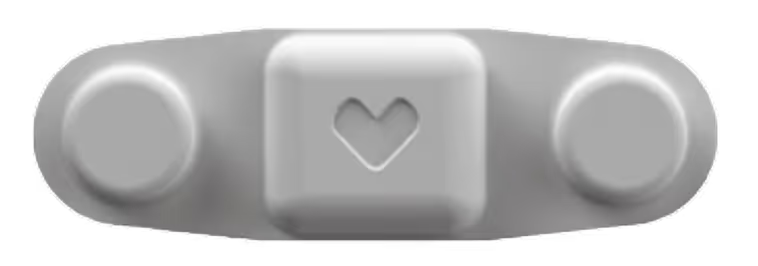
No bigger than a bandaid!
AFib Rarely Waits for an Office Visit
A 12-lead ECG captures about ten seconds of the heart's electrical activity, and a traditional Holter monitor covers 24 to 48 hours. Paroxysmal atrial fibrillation works on a different schedule. An afib episode can last a few minutes and then not return for weeks, and a large share of episodes produce no symptoms at all. The result is a normal study in a patient who genuinely has an irregular heart rhythm, and undetected AFib carries real consequences, because pooled blood flow in the atria raises the risk of a blood clot and stroke.
The Zywie Nano™ Patch approaches AFib detection differently. This wearable device records the heart's rhythm beat by beat for up to 30 days and transmits through Zywie's AI-driven mobile cardiac telemetry platform, so an abnormal heart rhythm surfaces for the healthcare provider in near real time rather than weeks after the fact. Small enough that patients forget it is there, the Zywie Nano™ Patch collects continuous ECG through an ordinary day, workouts and sleep included.
The Zywie Nano™ Patch approaches AFib detection differently. This wearable device records the heart's rhythm beat by beat for up to 30 days and transmits through Zywie's AI-driven mobile cardiac telemetry platform, so an abnormal heart rhythm surfaces for the healthcare provider in near real time rather than weeks after the fact. Small enough that patients forget it is there, the Zywie Nano™ Patch collects continuous ECG through an ordinary day, workouts and sleep included.
Learn More

90mm


28mm

Three Steps to an AFib Answer
Prescribe and Apply
Order the study through the workflow you already use. The small medical device is placed during an office visit or mailed to your patient with a short illustrated guide, and there are no lead wires or electrodes to connect.
Continuous Monitoring
The patch tracks every heartbeat day and night for the full study period, and your patient taps to log heart palpitations, chest pain, or fatigue as they happen, which ties each symptom to the electrical signal behind it.
Detailed Test Results
Your patient mails the patch back at the end of the study, and a report reaches your office within an average of 1-3 business days. It covers heart rate trends, total AFib burden, every arrhythmia event, and the symptoms your patient recorded.
When to Order Cardiac Monitoring for Suspected AFib

Extended monitoring earns its place whenever atrial fibrillation is suspected but undocumented, or when a known arrhythmia needs to be quantified. Common clinical indications include:
- Heart palpitations, chest pain, dizziness, or new exercise intolerance
- Suspected paroxysmal atrial fibrillation missed by a 12-lead ECG or 24-hour Holter monitor
- Cryptogenic stroke workup, where occult AFib may explain the blood clot
- Multiple risk factors, including advanced age, high blood pressure, obstructive sleep apnea, or heart failure
- Rhythm surveillance after catheter ablation, where recurrence often traces to gaps in ablation scar tissue
- Follow-up after starting a beta blocker, a calcium channel blocker, or an antiarrhythmic
- AFib burden quantification when findings will shape blood thinner or rhythm control decisions
.jpg)
What Continuous Monitoring Reveals About AFib
Confirming AFib is only the first question a monitor answers. The rest of the record tells you how often it happens, how long it lasts, and whether treatment is working.
Separate AFib From Every Other Irregular Rhythm
Patients describe skipped beats and racing spells the same way regardless of cause. Continuous ECG distinguishes the disorganized atrial activity of atrial fibrillation from atrial flutter, supraventricular tachycardia, and benign extra beats, and it confirms whether the rest of the study is spent in normal sinus rhythm.
Measure How Much Time Your Patient Spends in AFib
A single captured episode confirms a heart condition but says nothing about its scale. Thirty days of data produce an AFib burden figure, episode count, longest duration, and heart rate during each event. Those numbers inform anticoagulation discussions, rate control targets, and whether a sustained fast rhythm is straining the heart muscle.
Document the Episodes Your Patient Never Feels
Asymptomatic AFib is common, and it carries the same stroke risk as episodes patients notice. A device that records only when activated misses those runs entirely. Zywie's own clinical data shows 16-28% higher detection of first AFib, pause, and ventricular tachycardia events between days 15 and 30 compared with a 14-day study.
Frequently Asked Questions
Can a heart rate monitor detect AFib?

A consumer heart rate monitor can flag an irregular rhythm, but it does not produce the diagnostic-grade tracing needed to confirm atrial fibrillation. The Zywie Nano™ Patch records continuous ECG rather than pulse alone, capturing the heart's electrical activity in enough detail to document AFib and support a clinical diagnosis.
How is this different from a standard Holter monitor?
A Holter monitor records for 24 to 48 hours through several electrodes, lead wires, and a recorder the patient carries. The Zywie Nano™ Patch is one adhesive patch worn on the chest that records for up to 30 days and transmits automatically for near real-time review, which greatly improves the odds of catching a paroxysmal afib episode.
What is AFib burden, and why does it matter?
AFib burden is the share of the monitoring period a patient spends in atrial fibrillation. It shapes decisions about rate versus rhythm control, helps weigh blood thinner therapy, and provides a measurable baseline for comparison after treatment or catheter ablation.
How long should a patient wear the monitor for AFib detection?
Seven days often suffices when symptoms occur several times a week. Fourteen days fits roughly weekly patterns. Thirty days is the strongest choice for rare symptoms, silent AFib, and cryptogenic stroke workup. Zywie offers all three lengths.
Can the patch be used to monitor patients after catheter ablation?
Yes. Post-ablation monitoring documents whether sinus rhythm is holding, identifies asymptomatic recurrence, and quantifies any remaining burden. It also tracks how the rhythm responds as medications are adjusted or as patients adopt lifestyle changes such as weight loss, alcohol reduction, and treatment of obstructive sleep apnea.
Can patients shower, sleep, and exercise while wearing the monitor?
Yes. The water-resistant patch stays put through showering, sleeping, and most exercise. Patients should avoid submerging it, so swimming and hot tubs are out, but normal daily activity continues uninterrupted.
How quickly will I receive the test results?
Reports reach your office within an average of 1-3 business days of study completion, including full rhythm analysis, AFib burden, heart rate trends, and each logged symptom matched to the rhythm recorded at that moment.
Join Us in Revolutionizing Cardiology – Let's Transform Heart Health Together
Get in Touch