FOR PROVIDERS
Zywie Nano™ Patch: Heart Monitor for POTS
Continuous ECG data that captures the postural heart rate patterns behind POTS, helping you define the pattern and rule out mimicking arrhythmias.


No bigger than a bandaid!
See the Heart Rate Pattern Behind POTS
Postural orthostatic tachycardia syndrome is an autonomic nervous system disorder marked by a sustained heart rate rise of at least 30 bpm, or 40 bpm in adolescents, within 10 minutes of standing, without orthostatic hypotension. A POTS diagnosis relies on an active stand test or tilt table test, but those capture only a brief window, not how heart rate behaves across a full day.
Worn across daily life, the Zywie Nano™ Patch, a mobile cardiac telemetry (MCT) monitor, records how heart rhythm responds to real-world position changes, defining the pattern of heart rate elevation and ruling out arrhythmias like supraventricular tachycardia that cause similar symptoms. The wearable device pairs each logged symptom, from palpitations to brain fog, with the underlying rhythm through AI-driven, near real-time data, and over 500,000 patients have been monitored on the same patch.
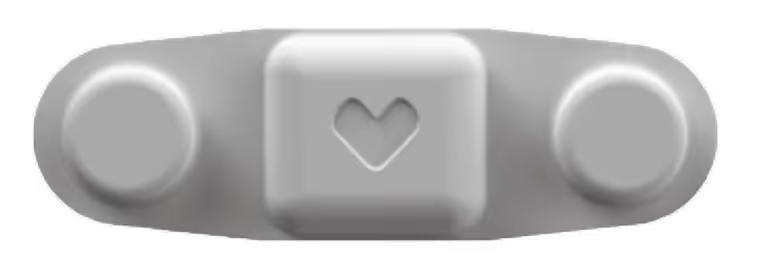
Light enough to forget it is on, the Zywie Nano™ Patch gathers continuous ECG while your patient moves through a normal day.
Worn across daily life, the Zywie Nano™ Patch, a mobile cardiac telemetry (MCT) monitor, records how heart rhythm responds to real-world position changes, defining the pattern of heart rate elevation and ruling out arrhythmias like supraventricular tachycardia that cause similar symptoms. The wearable device pairs each logged symptom, from palpitations to brain fog, with the underlying rhythm through AI-driven, near real-time data, and over 500,000 patients have been monitored on the same patch.
Light enough to forget it is on, the Zywie Nano™ Patch gathers continuous ECG while your patient moves through a normal day.
Learn More

90mm


28mm

As easy as 1,2,3...
Prescribe and Apply
Prescribe it the way you would any monitor. Your patient can place the small patch at home from a brief written guide, or have it applied during an office visit.
Continuous Monitoring
Around the clock, the patch tracks how heart rate responds as your patient stands, sits, and lies down, and they tap to log dizziness or palpitations, so each orthostatic symptom is tied to the rhythm behind it.
Detailed Test Results
After the study, the patch is sent back by mail, and your office gets a report within 1-3 business days, with heart rate trends by posture, symptom logs, and any arrhythmias picked up along the way.
When to Order Cardiac Monitoring for Suspected POTS

Ambulatory monitoring helps whenever you need to define the heart rate pattern or exclude an arrhythmia in a patient with orthostatic symptoms. Common scenarios include:
- Orthostatic intolerance with palpitations, dizziness, or lightheadedness on standing
- Suspected POTS where you want the heart rate pattern across daily activity, not just a 10-minute test
- Differentiating POTS from inappropriate sinus tachycardia, including whether heart rate settles overnight
- Ruling out supraventricular tachycardia, atrial fibrillation, or other arrhythmias that mimic POTS symptoms
- Correlating symptoms such as brain fog or chest pain with heart rate in real time
- Assessing response to beta blockers, ivabradine, or lifestyle changes over time
A heart monitor does not replace the active stand test or tilt table test that establishes a POTS diagnosis; it complements that workup with real-world heart rate data.
.jpg)
Where a Heart Monitor Fits in the POTS Workup
The value of ambulatory monitoring in POTS is the pattern of how heart rate rises and falls with posture and time of day.
Define the Pattern of Heart Rate Elevation
POTS-related orthostatic tachycardia is sustained and positional. Recording across daily life shows whether heart rate climbs from the supine position to an upright position and settles when the patient lies down, along with heart rate variability a brief clinic visit can miss.
Rule Out Conditions With Similar Symptoms
Palpitations are not unique to POTS. Continuous ECG helps exclude supraventricular tachycardia and atrial fibrillation, and separates POTS from inappropriate sinus tachycardia by showing whether heart rate slows at night. For patients with severe symptoms, that distinction guides very different treatment options.
Correlate Symptoms and Track Treatment
Symptom logging pairs each episode of dizziness or brain fog with the heart rhythm at that moment. Once treatment begins, whether beta blockers, added blood volume, or graded aerobic exercise, repeat monitoring shows how heart rate responds.
Frequently Asked Questions
Can a heart rate monitor diagnose POTS?

Not on its own. A POTS diagnosis is established with an active stand test or tilt table test documenting a heart rate increase of at least 30 bpm (40 bpm in adolescents) within 10 minutes of standing, without orthostatic hypotension. The monitor supports that workup by defining the pattern and ruling out other arrhythmias.
Does the patch measure blood pressure?
No. The Zywie Nano™ Patch records ECG and heart rate, not blood pressure. Because a POTS diagnosis also requires ruling out orthostatic hypotension, blood pressure is measured separately during the active stand test or tilt table testing
How is POTS monitoring different from a standard Holter monitor?
A traditional Holter monitor records for 24 to 48 hours using several electrodes and lead wires. The Zywie Nano™ Patch is a single adhesive patch that records continuously for up to 30 days using mobile cardiac telemetry, capturing far more position changes.
How does monitoring help tell POTS apart from inappropriate sinus tachycardia?
Inappropriate sinus tachycardia keeps heart rate elevated even at rest, while POTS tachycardia is driven by standing. A full day of data, including overnight, helps medical professionals separate the two.
How long should a patient wear the monitor?
Can patients shower, sleep, and exercise while wearing the monitor?
Yes. The water-resistant patch stays in place through showering, sleeping, and most exercise, including the aerobic exercise used in POTS recovery. Patients should avoid submerging the device, so no swimming or hot tubs.
How quickly will I receive the test results?
Your office has the report within an average of 1-3 business days after study completion,
Join Us in Revolutionizing Cardiology – Let's Transform Heart Health Together
Get in Touch